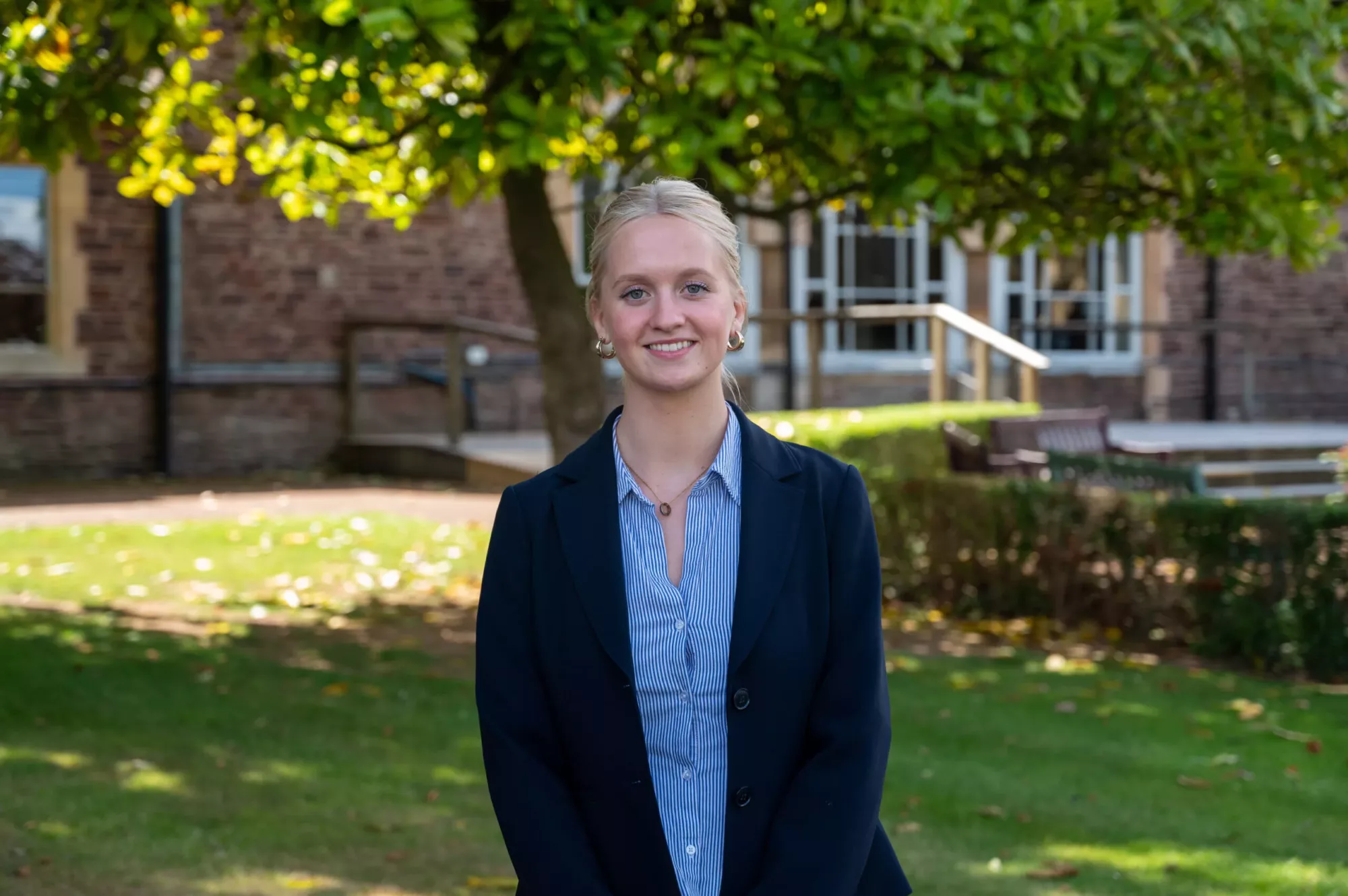
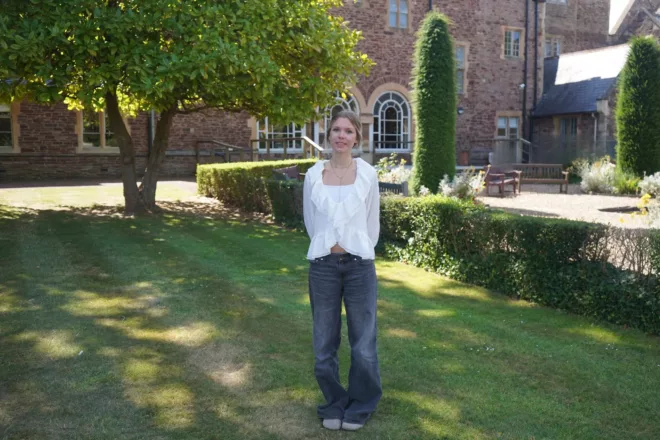
King’s is absolutely delighted to celebrate the remarkable achievement of Lower Sixth pupil Daisy, who has been awarded First Prize in the St John’s College, Oxford Classics Essay Competition.
This highly competitive national contest attracted a record 191 entries. Competing in the philosophy category against 54 submissions from across the UK, Daisy’s success is nothing short of exceptional.
What makes Daisy’s accomplishment even more inspiring is the journey behind it. Encouraged by her Latin teacher, Mrs Cashmore, to pursue an opportunity that extended far beyond the classroom, Daisy embraced the challenge with quiet determination. Recognising her natural curiosity, her love of Classics, and her willingness to think deeply, Mrs Cashmore’s encouragement proved the catalyst for an experience that would reshape Daisy’s confidence as a scholar.
Over several months, many hours of them during her school holidays, Daisy immersed herself in independent reading, research and reflection, all while balancing her demanding A Level subjects in Biology, Chemistry and Latin. For Daisy, this was not simply an academic task; it was a genuine exploration of ideas that fascinated her.
Out of four challenging essay titles, she chose the philosophical question:
“What, if anything, can we learn about ethics from the study of nature?”
Drawn to its ambiguity and depth, Daisy relished the absence of a clear answer. Instead, she embraced the complexity, carefully constructing an argument that explored the uneasy relationship between nature and human morality. Drawing on classical thinkers such as Aristotle and Lucretius, she argued that while nature may offer a moral guide, it cannot provide a complete ethical framework. Nature itself can be unpredictable, even cruel and it is ultimately human rationality that shapes our understanding of how we ought to live.
What set Daisy’s essay apart was not only her understanding of ancient philosophy, but her ability to connect it meaningfully to the modern world. By engaging with contemporary ethical issues, such as the use of embryonic stem cells, she demonstrated a maturity of thought far beyond her years, moving seamlessly between the ideas of the ancient world and the dilemmas of today.
The journey was not without its challenges. Faced with such a broad and complex question, Daisy initially found it difficult to know where to begin. But through conversations with teachers, discussions with her family, and hours of careful reading, her ideas began to take shape. With the thoughtful guidance of Mrs Cashmore and the invaluable support of librarian Hannah Horwood, who helped her access key academic texts, Daisy developed both the clarity and confidence needed to refine her argument.
Despite not studying essay-based subjects at A Level, Daisy found the process deeply rewarding. It allowed her to rediscover a love of extended writing and independent learning, while also strengthening the connections between her scientific studies and her growing interest in ethics.
Reflecting on her success, Daisy admits she was “shocked” to have won, but immensely proud to see her hard work recognised at such a prestigious level. She acknowledges that her younger self might never have imagined achieving something like this, highlighting just how far she has come since joining King’s.
Daisy speaks passionately about how her time at King’s has shaped her. “My academic interests have really evolved,” she reflects. “I’ve developed a genuine love of learning and the confidence to challenge myself.” Supported by dedicated teachers and a culture that encourages curiosity, she has grown into a pupil unafraid to explore complex ideas and think independently.
While Daisy is currently considering a future in Medicine, driven by her love of science her interest in ethics and philosophy continues to deepen. She is also planning a gap year, with ambitions to work in healthcare and travel, further broadening her perspective before university.
Above all, Daisy’s story is one of courage: the courage to try something new, to question deeply, and to believe, despite moments of self-doubt in her own ability.
Her achievement stands as a powerful example of what can happen when curiosity is nurtured, potential is recognised, and pupils are supported to go beyond what they think they are capable of.
Everyone at King’s warmly congratulates Daisy on this outstanding accomplishment and looks forward with great excitement to all that lies ahead.
Discover the magic of King’s
Book a personal visit
King’s Pupils Celebrate Strongest A-level Results in Recent Years

King’s Duo Earn International Recognition with England U19 Selection
King’s Pupils Shine on the Hockey Stage This Summer
King’s Cricket Festival Continues to Inspire the Next Generation of Global Cricketing Talent
King’s College, Taunton Celebrates Outstanding Value Added Performance and academic success in GCSE
King’s Hockey Players Shine at Exeter Talent Academy Cup
Fifth Form pupil Eva stars in award-winning film Lost Youth