Biology
OVERVIEW
Starting in Year 9, we look at understanding the interactions between the living and non-living environment using the outdoor learning environment of our science garden and pond as a model ecosystem.
Learning is supplemented by a visit to the Eden Project to undertake a conservation strategy exercise before embarking on some GCSE material of cells, microscopy, cell division, photosynthesis and respiration.
OUR SYLLABUS
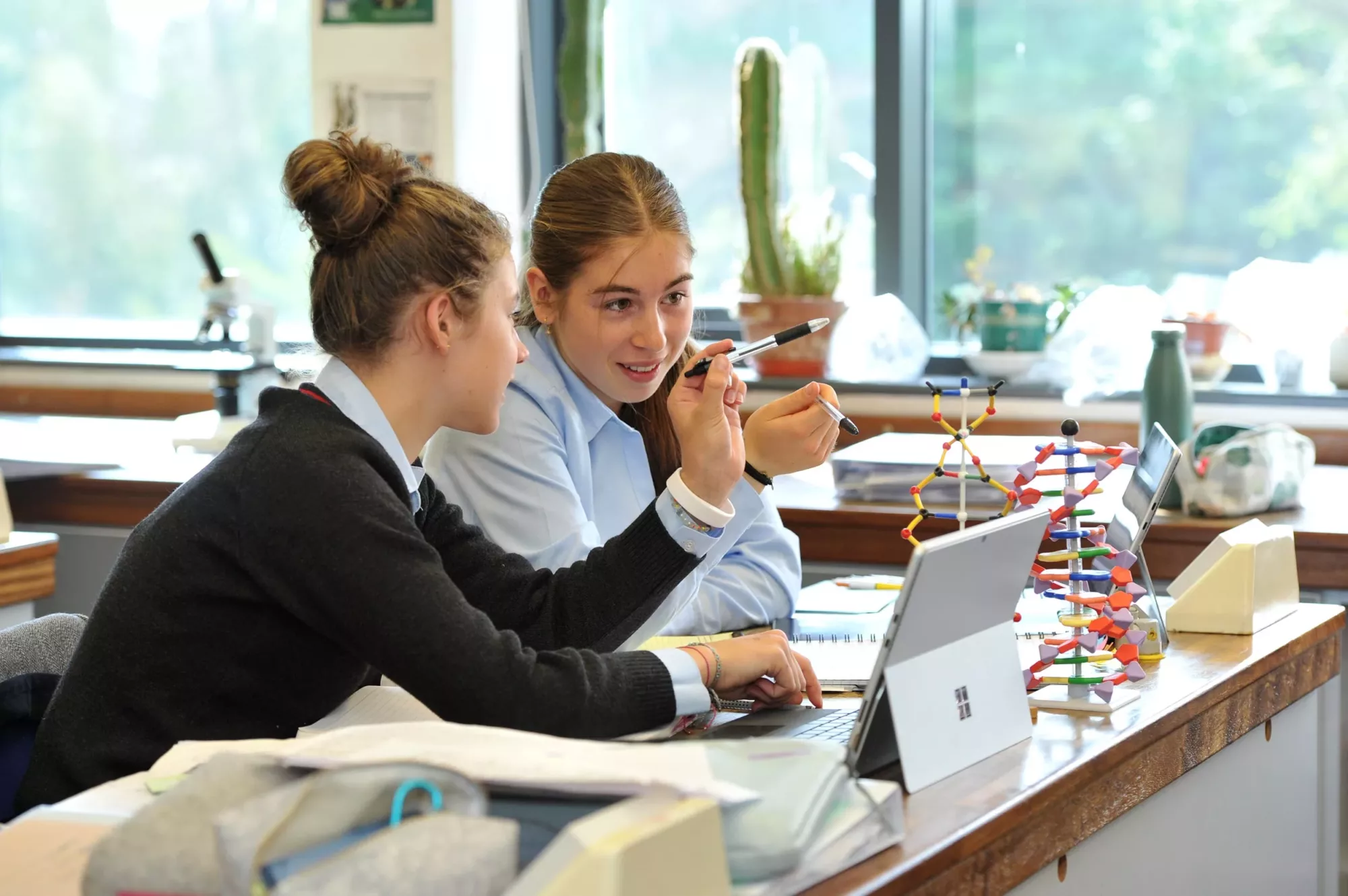
Year 10 and 11 follow the AQA GCSE specification (separate or trilogy) but expand the experience beyond the confinements of the specification with additional hands-on practical work on top of the required practical activities.
The course content is wide-ranging with topics such as digestion, exchange and transport, health and disease, nervous and endocrine systems, genetics and evolution. The Separate Science Pupils visit Science Live in Bristol for a day of lectures from expert keynote speakers and science-based activities.
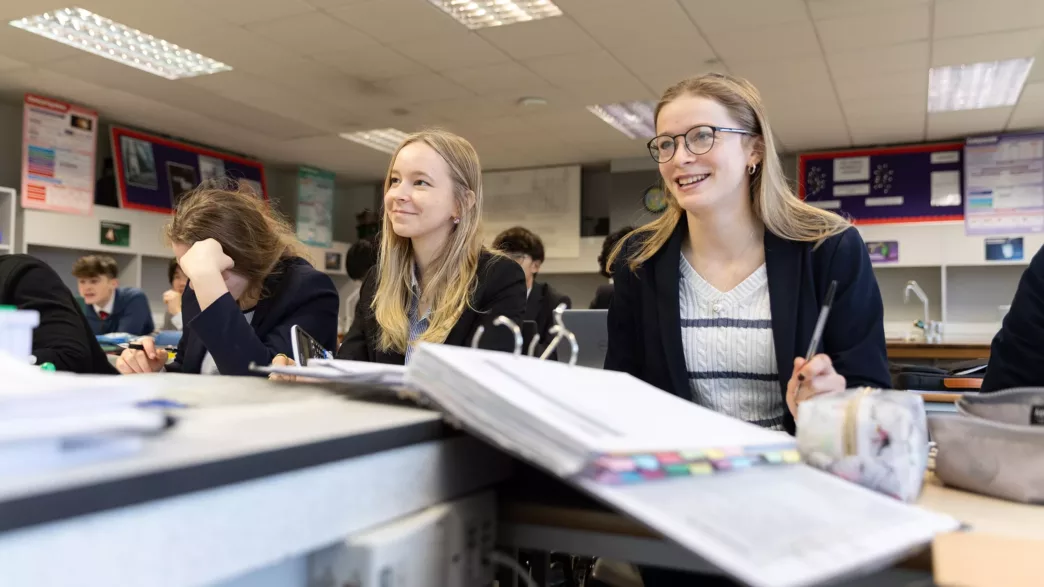
A structured programme of revision and support enables our GCSE pupils to achieve excellent grades in Biology with many choosing to study the subject at A-level.
When completing GCSE choices during Year 9, pupils and staff choose whether it is best for individuals to follow the Separate Science course where each of the three sciences is worth a separate GCSE grade – or to follow the Trilogy Science course where the three sciences combine to make two GCSE grades.
WHY STUDY BIOLOGY?
The Howard Biology Society runs alongside the GCSE curriculum. Pupils get the opportunity to engage in biological debates, watch surgeries, explore microorganisms, give presentations and complete dissections such as giant frogs, rats, squid and earthworms to name a few. The society aims to broaden the horizons of or pupils, to add context to their work and to help them pursue careers within Biology.
Pupils are encouraged to further explore their iological understanding through trips to The Eden project in Year 9 and to Science Live in Year 10. The former enables them to study conservation and ecology, and is run in conjunction with the art and geography departments, whilst the latter gives pupils access to lectures and exhibitions on a wide variety of science-based themes.
The Howard Biology Society runs alongside the GCSE curriculum. Pupils get the opportunity to engage in biological debates, watch surgeries, explore microorganisms, give presentations and complete dissections such as giant frogs, rats, squid and earthworms to name a few. The society aims to broaden the horizons of or pupils, to add context to their work and to help them pursue careers within Biology.
Pupils are encouraged to further explore their iological understanding through trips to The Eden project in Year 9 and to Science Live in Year 10. The former enables them to study conservation and ecology, and is run in conjunction with the art and geography departments, whilst the latter gives pupils access to lectures and exhibitions on a wide variety of science-based themes.
Pupils studying biology learn scientific research methodology, analysis and problem-solving, comprehension, data manipulation, mathematical, evaluation, presentation and critical thinking skills.