Physical Education

OVERVIEW
In the OCR A-level Physical Education (PE) course, students will explore a variety of topics that blend scientific, psychological, and socio-cultural aspects of physical education.
OUR SYLLABUS
Here’s an overview of the OCR A Level Physical Education (PE) course:
Paper one: Physiological Factors Affecting Performance
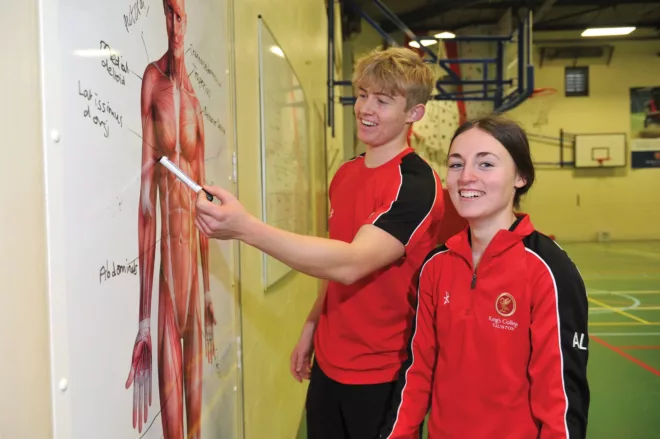
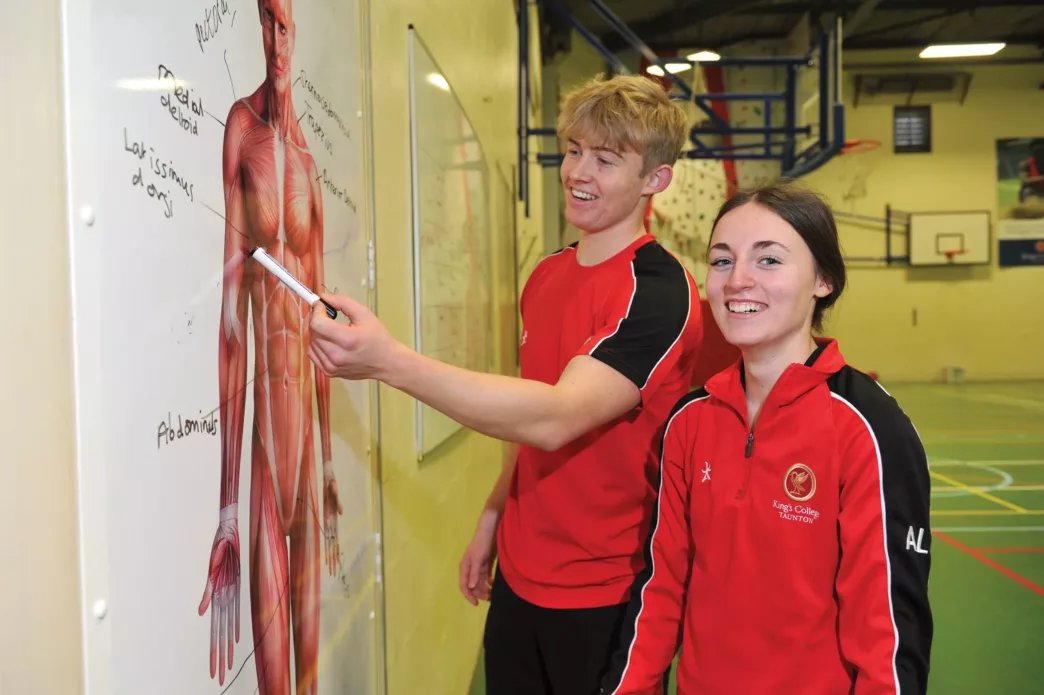
- Anatomy and Physiology: Study of the body’s systems (e.g., cardiovascular, respiratory, muscular) and their roles in physical activity.
- Exercise Physiology: Understanding how the body responds and adapts to exercise, including energy systems, fatigue, and recovery.
- Biomechanics: Analysis of movement patterns, forces, and mechanics to improve performance and reduce injury risk.
Paper Two. Psychological Factors Affecting Performance
- Skill Acquisition: How skills are learned, developed, and refined, including stages of learning and types of practice.
- Sports Psychology: Mental aspects of performance, such as motivation, arousal, anxiety, and strategies to enhance mental toughness.
Paper Three. Socio-cultural Issues in Physical Activity and Sport
- Sport and Society: The role of sport in society, including historical development, socialisation, and the impact of media.
- Contemporary Issues: Current topics such as ethics, commercialisation, technology in sport, and the role of women in sports.
Paper Four. Performance in Physical Education (Non-Exam Assessment)
- Practical Performance: Students are assessed on their performance in one chosen sport, demonstrating skills, techniques, and tactics.
- Evaluation and Analysis of Performance for Improvement (EAPI): Students analyse their own or others’ performance, identifying strengths and areas for improvement, and suggesting strategies for development.
This course aims to provide a comprehensive understanding of physical education, combining both theoretical knowledge and practical skills.
WHY STUDY PE?
A-level PE is special because it offers a holistic understanding of human performance, combining biology, psychology, and sociology. It has real-world applications, promotes personal development, and addresses contemporary issues in sports. The course includes practical experience, fostering teamwork and resilience.
It opens doors to various careers in sports, health, and education, and creates a sense of community among students. If you love sports and physical activity, PE will deepen your passion and provide valuable skills for the future.
You will also develop a wide-ranging knowledge of the ‘how’ and ‘why’ of physical activity and sport. The combination of physical performance and academic challenge provides an exciting opportunity for you to improve your own practical performance through the application of theory.
Pupils get to experience a trip to Exeter University where they get to use some of the sports science equipment, talk to students and get a tour of the university.
A-level PE develops valuable soft skills like teamwork, leadership, time management, problem-solving, communication, resilience, self-discipline, and empathy. Our teaching integrates theory with practical experience, emphasising real-world applications and personal growth. Students also develop strong evaluative and analytical skills through performance analysis.
Professional sports performance, teachers, physiotherapists, business, accountancy