Drama & Theatre Studies


OVERVIEW
A-level drama blends performance, creativity and theory to enable pupils to explore all aspects of drama in a detailed manner.

During lessons, the drama classroom turns into a creative space
in which you can express yourself.
Pupils explore many different styles of theatre and texts so that they finish the course with a breadth of new-found knowledge. While sitting back and watching Shakespeare and other productions has its place, theatre is becoming more of an experience for both the audience and spectator. On the practical side, pupils do not need to be the next Benedict Cumberbatch or Olivia Coleman, as they may be more interested in the technical aspect of theatre and we can help facilitate development of those skills, such as lighting, sound and set and costume design.
If pupils enjoy watching theatre, are happy to perform and are willing to try out ideas in a workshop environment, then they will enjoy the course. The ability to work as part of a team is essential.
There are many opportunities to apply skills practically as aperformer. More challenging areas will include essay writing and the application of theory to practice. Assessment is 40% practical and 60% written. Therefore, it is seen as primarily an academic subject by universities.
Drama suits pupils who are interested in studying any humanities subjects such as English literature, history and languages. Additionally, it sits well alongside social sciences such as psychology.

The study of drama and theatre studies at A-level can help pupils with a variety of skills as well as develop their creative career aspirations. Pupils who study this course will enhance their creative thinking, teamwork, analysis, presentation skills and planning. The course supports pupils wishing to improve their communication skills in both verbal and written forms, and can help them progress from this course into a number of career paths, either by further study or by direct entry to the job market.
The skills gained whilst studying a performing arts degree are valued by all types of employers as they will welcome candidates who display confidence and are adept in self-presentation, teamwork and collaboration, and the capacity to experiment with different ideas and the ability to learn from feedback. Examples of related roles that pupils may pursue, if drama Drama & Theatre Studies (Edexcel) is their chosen pathway, could include actor, stage manager, arts administrator, drama therapist and television production assistant. However, the skills learned are invaluable to all jobs that require interpersonal skills, such as business, marketing, the law, politics, medicine and many others.
CONTENT AND ASSESSMENT OVERVIEW
The Pearson Edexcel Level 3 Advanced GCE in Drama & Theatre consists of two coursework components and one externally examined paper.
Component 1: Devising
In this component pupils will develop their creative and
exploratory skills to devise an original performance. They will gain an understanding of how a new performance could be developed through the practical exploration of the theatrical style and use of conventions of the chosen practitioner.
Component 2: Text in Performance
Pupils will develop and demonstrate theatre-making skills as appropriate to their role as a performer or designer. They will explore how they realise artistic intentions in performance.
Component 3: Theatre Makers in Practice
Pupils will critically analyse and evaluate their experience of live performance. As an informed member of the audience they will deconstruct theatrical elements which will help inform their own production choices and develop their own ideas as potential theatre-makers.
Pupils will practically explore texts in order to demonstrate how ideas for performance and production might be realised from page to stage. They will also consider the methodologies of practitioners and interpret texts in order to justify their own ideas for a production concept.


OUR SYLLABUS
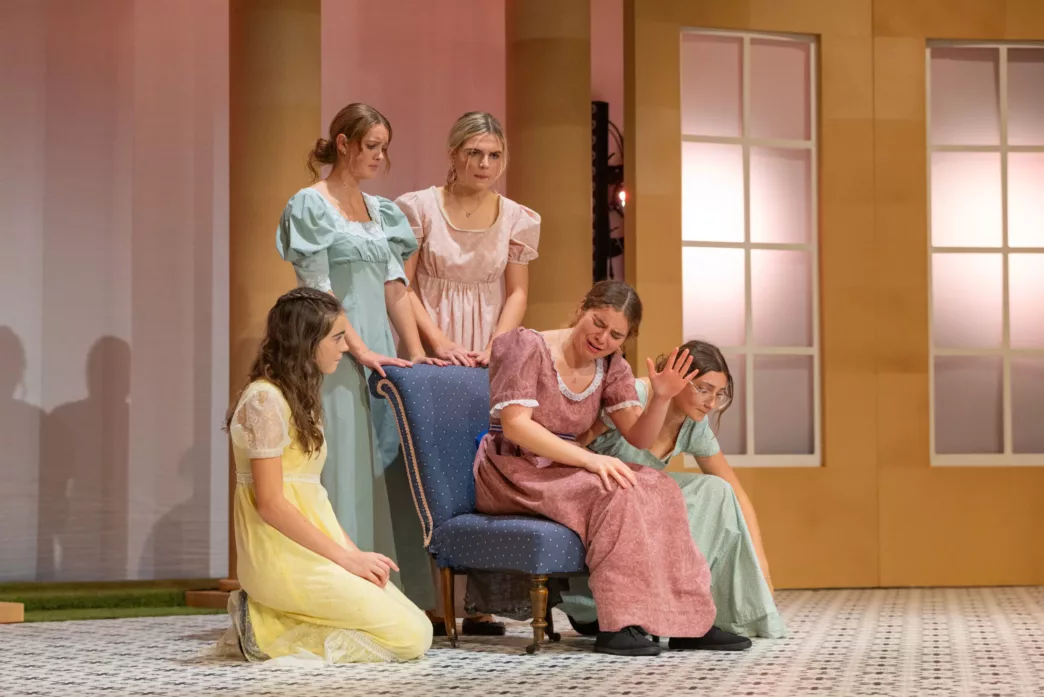
Students explore a variety of theatrical practitioners and styles to develop their own devised work, using a play text as a stimulus. This practical element of the course work accounts for 60% of the final grade and provides those with acting or technical skills the chance to shine. Recent productions have focused on challenging topics including adolescent mental health, grief and complex relationships.
They also study two set texts to prepare for a written exam in which they write from the perspectives of an actor, director, and technical manager.

WHY STUDY DRAMA?
Studying drama is special because it brings together creativity, collaboration, and critical thinking. It gives pupilsthe chance to explore powerful plays, different perspectives, and the craft of performance, all while developing their own voice. The subject’s hands-on nature is what makes it so engaging—whether creating original work, analysing thought-provoking texts, or experiencing the magic of live theatre.
Drama builds confidence, empathy, and resilience, offering a unique opportunity to connect deeply with others. It’s a subject where students can express themselves fully and gain lifelong skills, both on and off the stage.
In order to augment the study of the set texts and to develop their ability to analyse productions, pupils attend a variety of live theatre performances. In some cases, these trips have also included pre-show discussions with members of the cast, technical team or director. In addition, we regularly host workshops from renowned professionals.
Pupils also have the opportunity to perform in the many differing forums that we have at King’s, whether the whole-school musical or a more intimate performance evening.
Pupils studying drama develop a wide range of transferrable skills, from building their self-confidence to developing their communication skills. Teamwork is a key aspect that is nurtured within the subject, as well as the ability to be adaptable in approach.
Juno Temple, star of Ted Lasso, Atonement and St Trinians.