Lifelong Learning and Dad’s maths
I first came across the work of Jordan Peterson about ten years ago. I don’t mean his impenetrable tome Maps of Meaning but the bite-sized version of Peterson that appeared on podcasts and in viral clips.
He became a notable figure in the culture wars of the 2010s, and whereas there is some truth in the phrase that we should judge a man by the company he keeps, I found Peterson’s protestations mostly uncontroversial. His readable bestseller 12 Rules for Life is self-help by numbers: a thinly veiled exhortation to ‘get yourself together’, with references to scholarly papers designed to add credence to the fatherly scolding. I am fully with Peterson when it comes to Rule 10, however, and the command to ‘Be Precise in Your Speech’ is one I support fully.
Careless talk may not cost lives to the extent it did in the 1940s, but careless talk still maintains its capacity to confuse, obfuscate, and provide general irritation. One of my literary heroes, Ernest Hemingway, suggested removing all modifiers when writing – to ‘kill your darlings’, a phrase that is often misattributed to him.
Education is more guilty of resorting to cliché than a genuine lack of precision, but this is a similar failing. When those in education claim to promote ‘independent learning’, or that they ‘cater to the needs of every child’, it is a good idea to call them out. If they cannot explain how the statement is achieved, it’s phatic rather than factual.
Edu-phrases wax and wane in popularity, but one that remains near the top of the chart is ‘lifelong learning’. Schools will claim to promote lifelong learning, though it’s a claim hard to judge, unless one invokes an extended version of 70-Up. Perhaps lifelong learning is an inevitability rather than something that needs to be encouraged, because when a tyre blows out on the motorway, we all turn to YouTube for a tutorial on how to pivot to the spare. It’s lifelong learning brought about by necessity.
The more honourable version is to commit to becoming cleverer every day – to end the day knowing more than you did at the start; learning as a moral necessity, not pure pragmatism. We need to find joy in the struggle, in making our brain hurt with complex ideas. That’s why we read Infinite Jest or Moby Dick, and that’s why we watch the films of Kurosawa, Tarkovsky, and David Lynch.
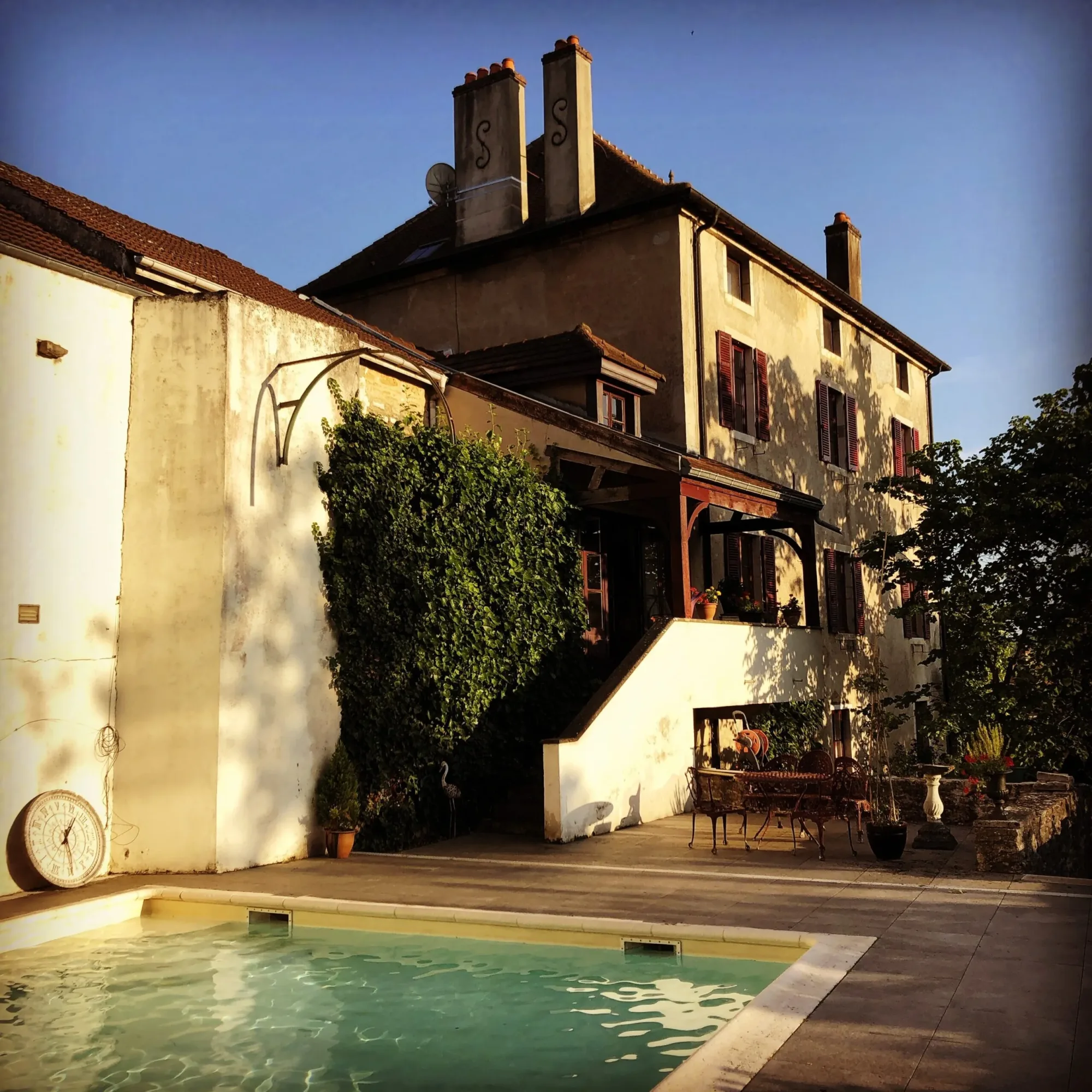
My father is a retired headmaster, and he lives in a small village in Burgundy. He has an extensive wine cellar and an inviting pool. I do not know what compelled him to learn A-level maths last year, but for reasons known only to himself, he decided that having achieved an A grade in A-level maths (the 1966 version), it was worth attempting to re-learn the modern iteration of the A-level all by himself, with the help of a couple of course books purchased online. Lacking an examination centre in his village of 158 people, he decided to sit the A level at St Paul’s School in Barnes, South London, where he taught for 15 years until 1990. Giving himself an ambitious target of learning the whole of A-level maths from his kitchen table in seven months, he set to work, and around 200 days later found himself in an examination hall, for the first time since 1969, taking the papers with pupils born in the same year he retired.
This is real independent learning. It is learning for the joy of learning; to test one’s faculties and to not be found wanting; it is a challenge that is purely intellectual, to derive satisfaction for the self and to prove that the little grey cells function just as well as ever. I may use the phrase ‘lifelong learning’ at King’s College’s upcoming Open Day, and I hope I am challenged to explain what it means, knowing that I possess a perfect example.
— Mr Benjamin Evans, Headmaster
Photo credit: Mr Evans’ father’s house in Burgundy
Discover the magic of King’s
Join us at our upcoming Open Day